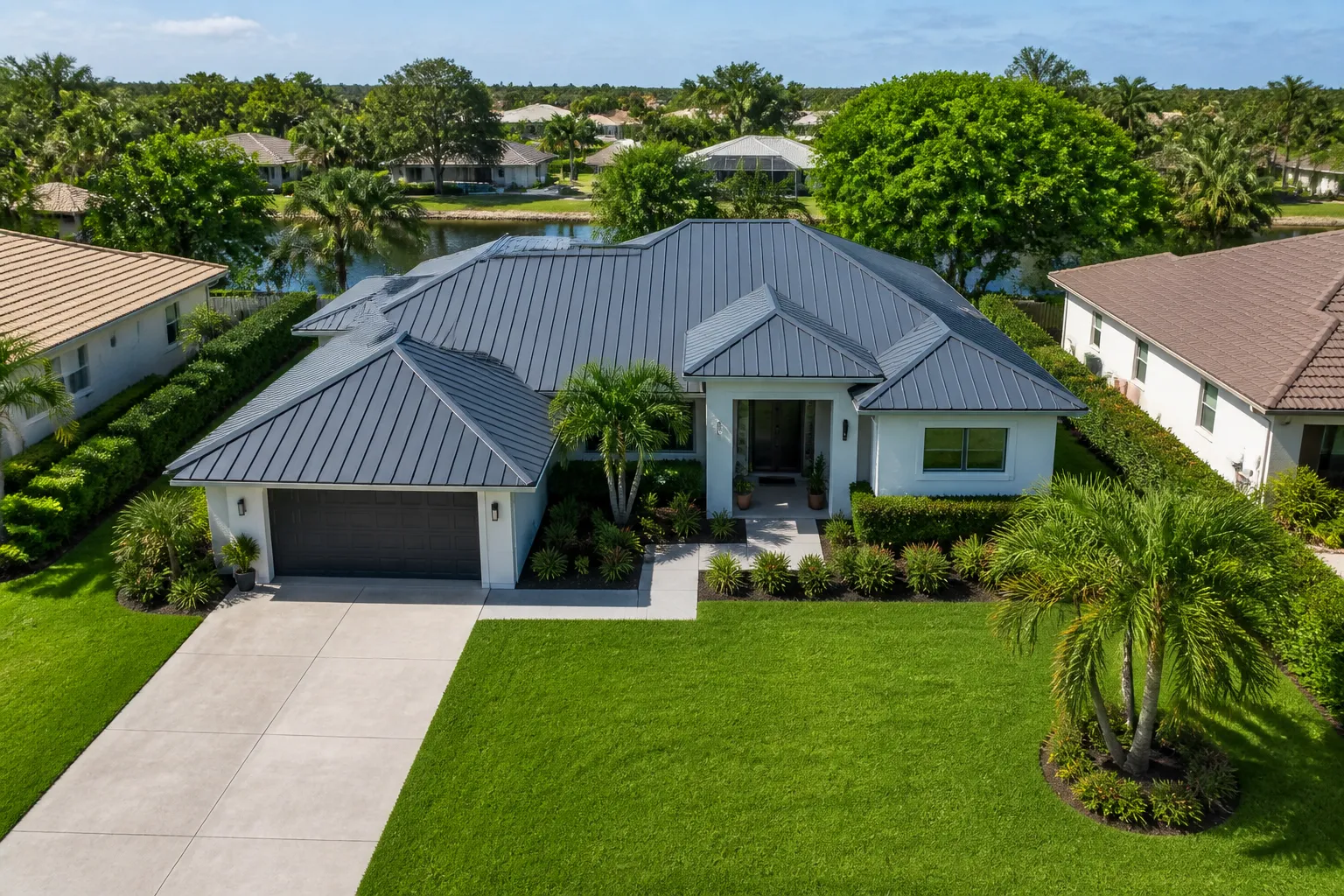
A metal roof can be a practical choice for Coral Springs homeowners who want a roofing system built for intense sun, seasonal downpours, and strong wind. Its clean lines and long service life are appealing, but a successful result depends on more than the panels themselves. The roof deck, underlayment, flashing, fasteners, ventilation, and edge details all need to work together.
Coral Springs Elite Roofing helps homeowners evaluate metal roofing for a replacement, addition, or targeted repair. We look at the condition and shape of the existing roof, drainage paths, penetrations, and the details that can affect performance in South Florida weather. Then we explain the material and installation approach in straightforward terms.
Metal roofing is available in several profiles, including standing seam panels, exposed-fastener panels, and metal shingles designed to resemble more traditional materials. Each option has a different appearance, attachment method, and maintenance consideration. The right choice should fit the home’s roof geometry as well as the owner’s priorities for appearance, long-term care, and weather resistance.
Because metal sheds water quickly, roof slope and transitions still matter. Valleys, wall intersections, skylights, vents, and chimneys must be detailed so water is directed onto the roof surface and away from the building. A roof can look excellent from the street while a poorly handled transition creates a weak point, so the installation details deserve close attention.
These are material characteristics, not a substitute for careful design. The roof system must be compatible with the structure and installed to applicable requirements.
If a current roof has widespread wear, repeated repairs, or material nearing the end of its useful life, a metal system may be worth comparing with shingle or tile options. The decision should account for roof complexity, deck condition, and the scope of related repairs.
Long, uninterrupted roof planes are often well suited to standing seam panels. More complex roofs can also use metal, but additional cuts and transitions increase the importance of precise measuring and flashing work.
Leaks around penetrations or valleys are not automatically solved by changing materials. An inspection can determine whether the issue is the roof covering, failed flashing, drainage, or a combination of factors.
We discuss the roof’s history, visible concerns, appearance preferences, and any plans that could affect the project.
We examine the roof surface, edges, transitions, penetrations, drainage areas, and accessible structural conditions.
We outline the practical differences between profiles and the details required for the roof shape.
Recommendations distinguish between roof-covering work and related items such as decking, fascia, flashing, or ventilation when they are relevant.
After work is complete, we review the visible installation and discuss sensible care steps.
Fastener selection and placement are especially important. Some systems conceal fasteners, while others use exposed fasteners with sealing washers. Neither should be treated casually. Movement from temperature changes, correct spacing, and avoiding damage to the panel finish are all part of a durable installation.
Flashing is another major consideration. Ridge caps, eaves, rakes, valleys, pipe boots, sidewalls, and chimneys all need compatible components. Mixing materials without considering how they interact can lead to premature deterioration. Proper underlayment adds another layer of protection beneath the panels.
Metal roofs still benefit from periodic observation. After heavy weather, look from the ground for displaced trim, loose debris, visible panel damage, or gutters that are pulling away. Keep branches from rubbing the surface and have concerns evaluated before water reaches interior finishes. Avoid walking on panels unless it is necessary and done with the appropriate approach, since foot traffic can damage finishes or distort panels.
With a complete roof assembly beneath it, a metal roof does not simply act like an uncovered sheet of metal. Interior sound depends on the deck, insulation, attic space, and other layers in the home.
Some metal systems are intended for lower slopes, while others require more pitch. The profile and manufacturer instructions need to match the roof conditions.
Quality coated panels are made for exterior exposure, but finish condition, compatible flashing, and maintenance all influence long-term performance.
That depends on the existing assembly, local requirements, and roof condition. An inspection is needed before recommending an overlay.
Gutters are not required on every home, but water management should be considered carefully because smooth panels can shed water quickly.
A professional evaluation of the roof shape, deck, drainage, and details provides the clearest answer. Contact Coral Springs Elite Roofing to discuss your property.
Next Step
If you are seeing a leak, storm damage, aging materials, or simply want a professional opinion before planning work, request a free roofing estimate. We will help you understand the condition of your roof and the next practical step.