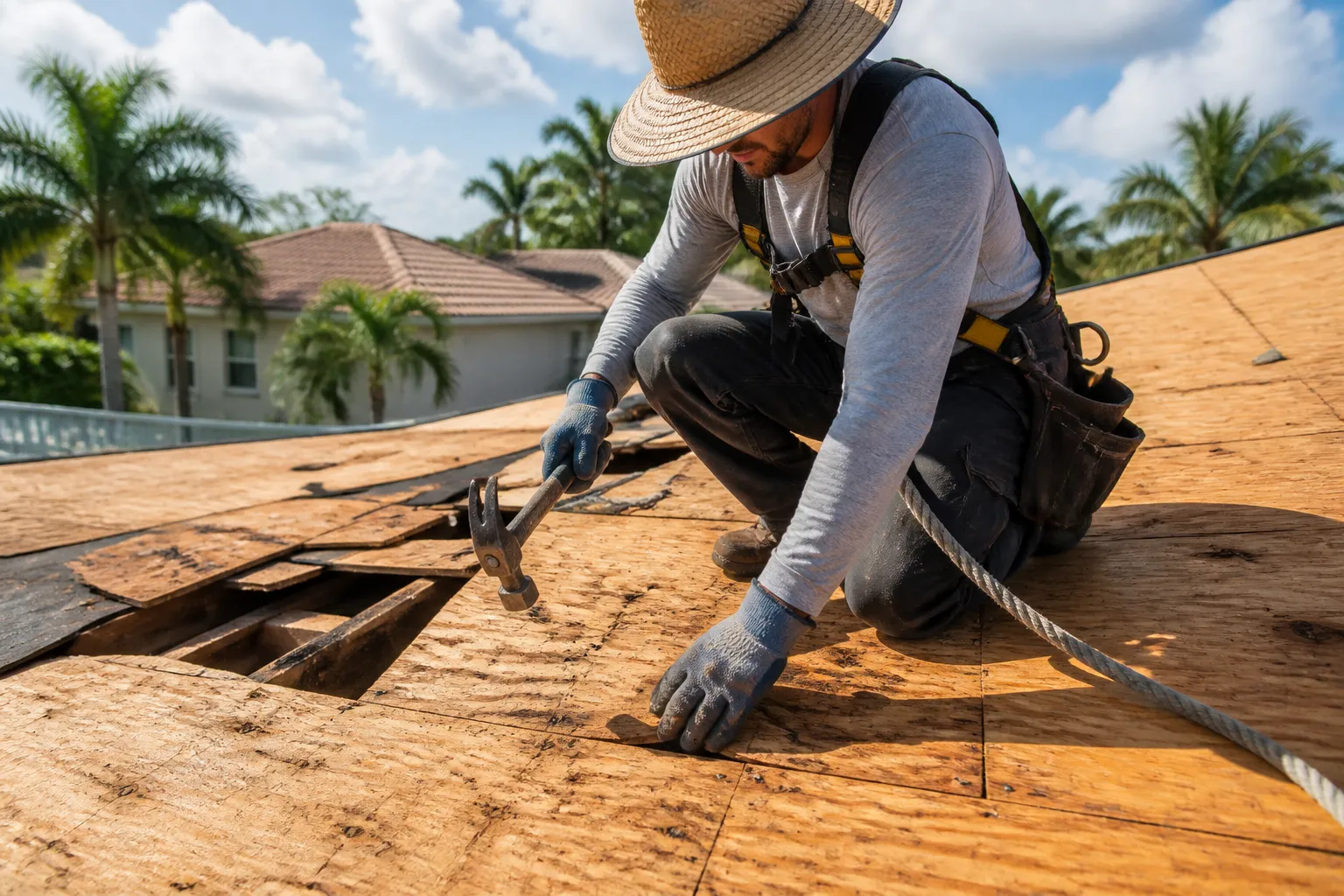
The roof deck is the structural surface beneath your underlayment and roofing material. When long-term moisture, decay, or physical damage affects the deck, installing new roofing over it can leave an unstable base. Deck repairs protect the layers above by restoring a sound surface where it is needed.
Coral Springs Elite Roofing evaluates deck concerns during roof repairs and replacement work. We explain what is visible, identify related sources of water entry, and rebuild the roof assembly over repaired areas in the correct order.
Deck damage is often found after roof materials are removed, since the deck is usually concealed by underlayment and the visible covering. In some cases, attic observations, sagging roof lines, repeated leaks, or soft areas discovered during roof work indicate that closer evaluation is needed.
Repairing the deck is not merely a cosmetic step. Underlayment and roofing material need a stable substrate to be installed correctly and to manage weather exposure.
Leaks around flashing, valleys, vents, roof edges, or worn materials can let water reach wood decking over time.
Displaced material or impact damage can expose roof layers and create a path for rain.
An older repair may correct visible material while hidden moisture damage remains below. Later work can reveal the true condition.
We inspect exposed decking and nearby details to understand the extent of the concern.
We consider the leak source, underlayment, flashing, and drainage before rebuilding.
Damaged sections are taken out so the surrounding condition can be reviewed.
New material is fitted securely to provide a stable base.
Underlayment, flashing, and the roof covering are integrated over the repaired area.
A full replacement provides the clearest access to the deck. Once old materials are removed, damaged sections can be identified before new underlayment and roofing are installed. This keeps the new roof from being built over concealed deterioration.
A small deck repair may be possible when damage is limited, but the scope should be based on what is found at the affected area. A professional assessment is more reliable than judging the condition from an interior stain alone.
Address roof leaks promptly, keep drainage paths clear, and trim branches that rub the roof. From the ground, watch for changes in the roof line, displaced materials, or new ceiling stains. Avoid walking on the roof to investigate suspected softness.
It is the structural surface that supports the underlayment and visible roof materials. It needs to remain sound so the layers above can be securely installed and continue shedding water as intended.
Deck damage is often connected to water entering through the roof layers above it. Both the damaged decking and the source of that water should be evaluated before the area is rebuilt.
Not always, because much of the deck is hidden by roofing materials and attic finishes. Interior stains or sagging can be clues, but some damage is only visible once roof layers are removed.
Localized damage may be repaired when the surrounding decking remains sound. The affected area and nearby roof details should be reviewed first to confirm the appropriate scope.
Yes, the roof layers above a completed deck repair are rebuilt to work together. That includes integrating the underlayment, flashing, and visible roofing material around the repaired section.
Yes, a visible change in the roof line merits professional assessment. Sagging can indicate deck deterioration or another structural concern that should not be judged from the ground alone.
Next Step
If you are seeing a leak, storm damage, aging materials, or simply want a professional opinion before planning work, request a free roofing estimate. We will help you understand the condition of your roof and the next practical step.