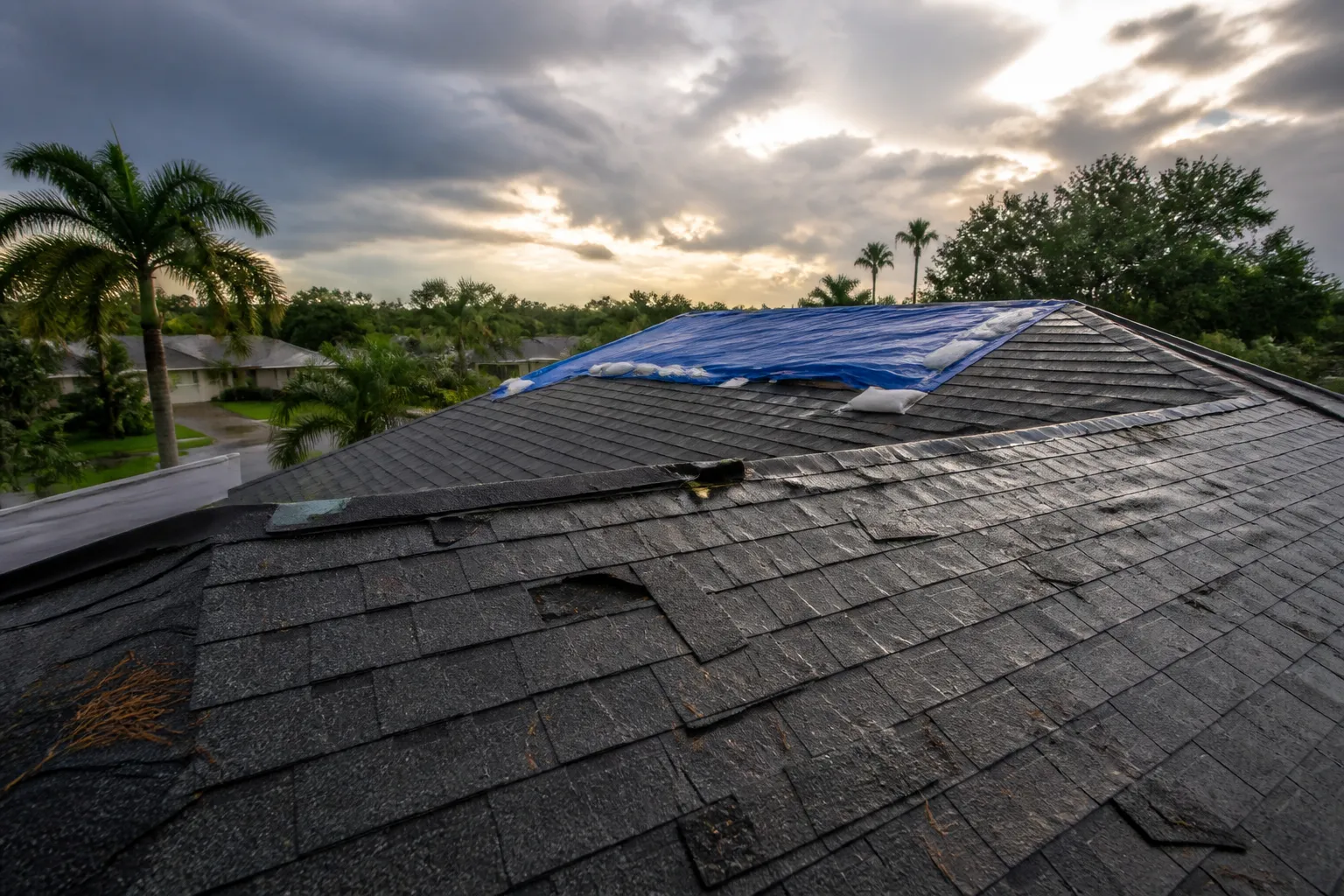
A missing shingle, lifted edge, or stained ceiling after heavy weather can turn into a bigger roofing problem fast. If your roof took a beating during rain or wind, the safest next step is a careful inspection and a clear repair plan before the next storm arrives.
Coral Springs homeowners often notice damage after the weather has already passed: loose flashing, broken tiles, granule loss, or leaks that show up hours later. Coral Springs Elite Roofing handles storm damage repair with a focus on finding the source, limiting further exposure, and restoring the roof with repairs that match the condition of the system.
Not every damaged roof looks dramatic from the ground. Some of the most important warning signs are subtle, and catching them early can help you avoid wider roof repair needs.
If you spot any of these signs, a prompt roof inspection can help confirm whether the damage is isolated or spread across more than one section of the roof.
South Florida weather can stress a roof from more than one angle. Heavy rain can push water into openings that were already weakened, while strong winds can raise edges and loosen materials. Intense sun adds another layer of wear by drying out roofing surfaces over time.
Storm damage is not always the result of one dramatic event. Sometimes a roof already has a weak spot, and one storm is enough to turn that weak point into an active leak. That is why we look at the full roof condition rather than only the visible damage area.
Wind can work under shingles or around tile edges, disturbing the seal and exposing the underlayment. Once that protective layer is compromised, water can travel farther than expected before showing up inside.
After heavy rain, water may enter through flashing joints, cracked materials, or openings created by impact. The leak may appear far from the actual entry point, which makes source finding an important part of the repair process.
Coral Springs Elite Roofing approaches storm damage repair with a straightforward process that starts with identifying the problem and ends with a roof that is ready for the next round of weather.
We examine the affected areas, look for visible and hidden damage, and check key transition points where leaks often begin.
Not all stains or drips come from the same spot. We work to identify where the damage started so the repair addresses the actual cause.
Once we understand the roof condition, we explain the needed work and recommend the right repair approach for the material and damage level.
We repair or replace damaged sections, secure vulnerable areas, and address roof details that were affected by the storm.
This process is designed to keep the job clear and manageable for property owners while restoring confidence that the roof can handle local weather conditions.
Storms affect different roofing systems in different ways, so the repair method needs to match the material on your property. We handle storm damage repair for several roof types common throughout Coral Springs.
Shingles may lose granules, curl, crack, or lift after wind and rain exposure. Repairs often focus on replacing damaged sections and checking nearby areas for hidden loosened tabs.
Tile roofing can crack or shift when struck by debris or stressed by strong weather. We assess the visible breakage and surrounding tiles so the repair blends with the rest of the roof system.
Flat roofing can develop punctures, seams that separate, or drainage-related trouble after heavy weather. Careful inspection is important because water may linger longer on these surfaces.
Every storm affects roofs differently, so the repair scope can vary from one property to another. The goal is to restore protection without making the repair more intrusive than it needs to be.
In some cases, roof restoration may be a better fit than a narrow patch repair, especially when storm damage has affected a wider area of the roof surface.
Some homeowners wait until a leak becomes obvious indoors, but roof damage often starts much earlier. Taking action after the first sign of trouble can reduce the chance of more structural strain, interior staining, or repeated water intrusion.
Common reasons to schedule storm damage repair include:
If the damage looks minor, it still deserves a closer look. Small gaps can become major openings once rain and wind return.
Roof damage after a storm can feel disruptive, especially when you are not sure how much of the roof was affected. Coral Springs Elite Roofing works with homeowners and property managers across Coral Springs and nearby Broward County communities, offering repair service that keeps the process direct and practical.
We know that a roof problem can interrupt daily life, so we aim to give you clear observations, honest recommendations, and repairs focused on the actual damage. Whether the issue is isolated or more widespread, the goal is to restore the roof without adding unnecessary steps.
Once repair work is complete, it helps to understand what caused the damage and which areas may need extra attention later. A roof with previous storm exposure can have vulnerable points that deserve monitoring after future weather.
That is why we review the affected sections carefully and explain what we found. Knowing whether the issue involved shingles, tile, flashing, or another roof detail gives you a better sense of what changed and why the repair was needed.
Look for missing roof material, indoor stains after rainfall, loose flashing, or debris impact near the roofline. These signs often point to roof-related trouble rather than a problem elsewhere.
Yes. Even a small crack, lifted edge, or displaced tile can allow water to enter over time, especially during repeated rain.
No. Many storm damage repairs involve targeted restoration of the affected section. The right solution depends on the extent of the damage and the condition of the surrounding roof.
Water can travel along roof layers before becoming visible indoors. That is why source tracing is a key part of storm damage repair.
Shingle, tile, and flat roofs can all be affected, but the type of damage often differs. Wind, impact, and water exposure show up differently on each system.
Waiting can allow the damage to spread, especially if rain returns. A closer inspection helps determine whether the roof still has a secure weather barrier.
If your roof has visible storm damage or you suspect a hidden leak after rough weather, Coral Springs Elite Roofing is ready to help with a clear repair path. Call +19543242843 or visit us at 3301 N University Dr Ste 100, Coral Springs, FL 33065 to arrange service for your property.
Next Step
If you are seeing a leak, storm damage, aging materials, or simply want a professional opinion before planning work, request a free roofing estimate. We will help you understand the condition of your roof and the next practical step.