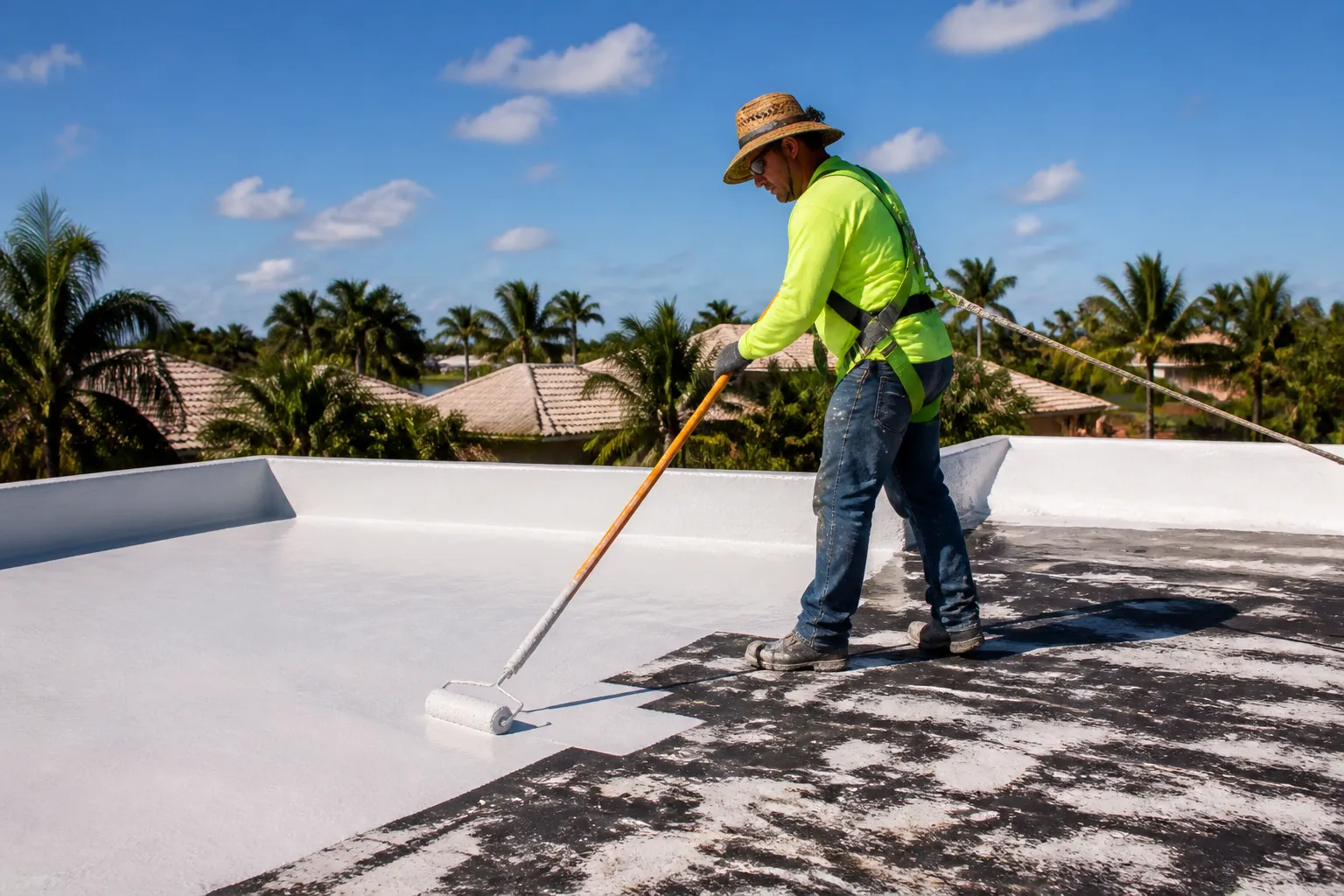
Roof waterproofing is about controlling where rain goes before it reaches the structure below. In Coral Springs, heavy downpours, humidity, strong sun, and wind-driven rain make that job especially important. A waterproof roof is not created by applying one product over every surface. It depends on a complete assembly with sound roof covering, underlayment, seams, flashing, drainage, and details around every opening.
Coral Springs Elite Roofing evaluates roof waterproofing needs based on the roof type and the condition of the existing system. Some situations call for a localized repair at a penetration or flashing detail. Others may involve restoring a low-slope surface, addressing failing seams, or planning a replacement when the roof assembly has widespread wear.
Most sloped roofs rely on overlapping materials that direct water downward. Underlayment beneath the primary covering provides an added layer of protection. Flashing then handles areas where water flow is interrupted by a wall, valley, vent, chimney, or other transition. Low-slope roofs commonly use membranes or coatings with carefully treated seams and penetrations.
Waterproofing work must respect this sequence. If water is blocked in one place but trapped behind another layer, the repair can create a new problem. The aim is to create a continuous path off the roof and into the appropriate drainage system.
On steep-slope roofs, waterproofing often focuses on the underlayment and the details beneath or beside the visible covering. Cracked shingles or displaced tile may be part of the issue, but valleys, flashings, and roof edges also need evaluation.
Metal roofing depends on correctly installed panels, fasteners, closures, seams, and flashing. Movement from temperature changes and aging seal points should be considered during inspection.
Membrane and coated roof systems need continuous surfaces with secure seams, drains, penetrations, and perimeter details. Standing water may reveal a drainage concern that should be addressed along with surface repairs.
We ask when the problem appears, where water is visible, and whether it is tied to certain weather conditions.
We look for cracks, open seams, compromised flashing, drainage issues, and signs of aged materials.
Interior staining can be away from the entry point, so we consider how water may travel through the assembly.
We explain whether a focused repair, restoration approach, or broader roof work is more practical for the observed condition.
We discuss drainage, debris control, and visible changes that merit future attention.
Even durable roofing materials struggle when water cannot leave the roof as intended. Gutters, downspouts, drains, scuppers, valleys, and roof slopes all affect how quickly water moves. Leaves, branches, and loose granules can block flow and allow water to sit near seams or edges.
Water should never be assumed to be harmless simply because it is on the outside of the home. Persistent ponding, overflowing gutters, and stains at the roofline are useful clues that a drainage review is needed.
A roof coating can be suitable for certain roof types and conditions, especially where a system is designed for restoration. Surface preparation, adhesion, compatible repairs, seam treatment, and drainage are critical. Coating over wet, deteriorated, or unstable material does not correct the underlying cause. A roof evaluation should determine whether the existing surface is a reasonable candidate.
No. Waterproofing can include repairs or restoration work, while replacement involves installing a new roof system when conditions call for it.
Often, early inspection helps identify localized issues before repeated water entry affects more materials.
Wind direction, water volume, drainage, and a vulnerable flashing or seam can make a leak appear only under certain conditions.
It depends on the roof type and condition. Damaged or wet components should be evaluated rather than covered without preparation.
Ponding is water that remains on a low-slope roof longer than expected after rainfall and may indicate drainage or surface concerns.
Document the location and timing, protect the interior area, and contact Coral Springs Elite Roofing for an inspection.
Next Step
If you are seeing a leak, storm damage, aging materials, or simply want a professional opinion before planning work, request a free roofing estimate. We will help you understand the condition of your roof and the next practical step.