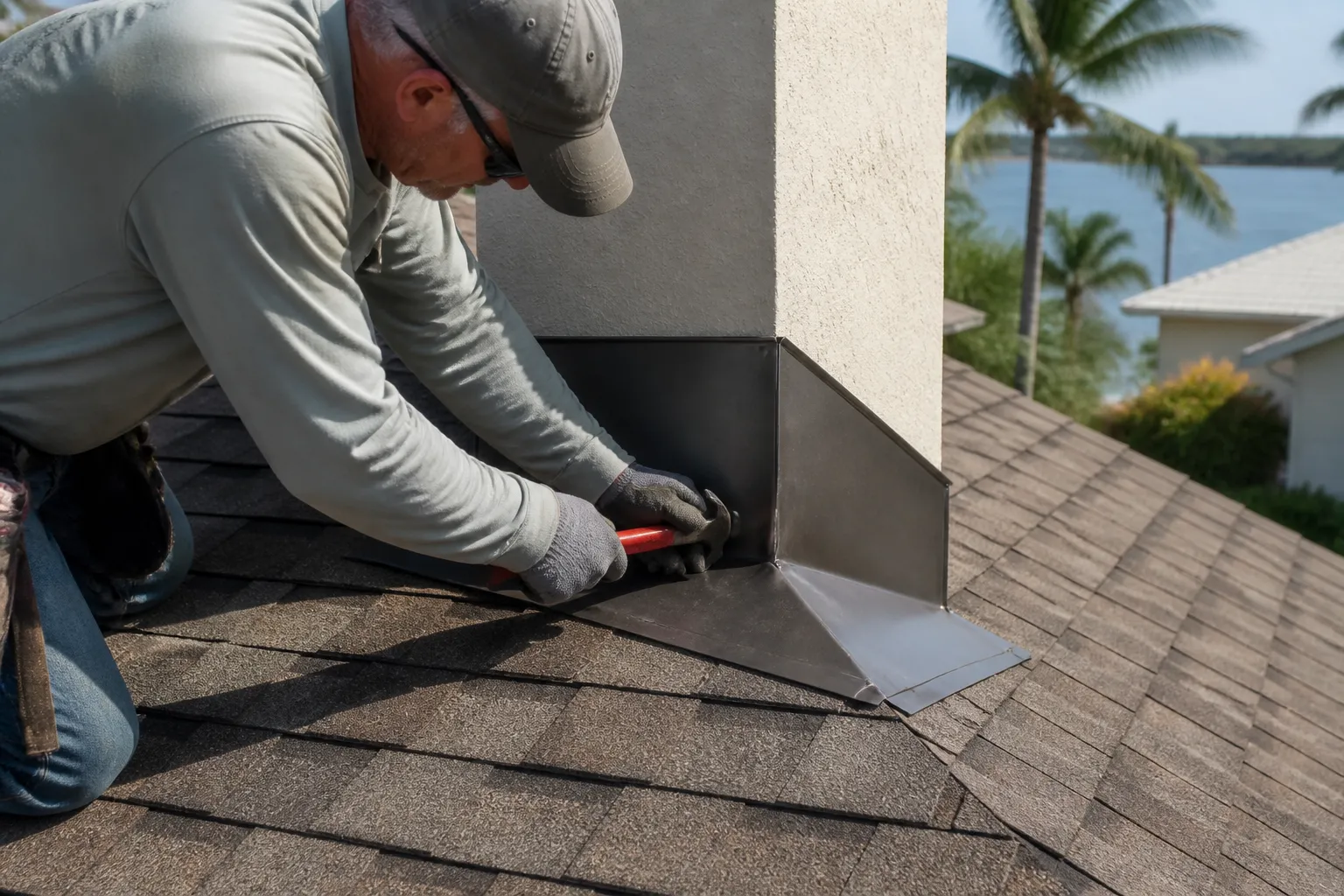
Roof flashing is one of the most important parts of a water-shedding roof, even though it is easy to overlook from the ground. It is the material used to guide water away from places where the roof changes direction or meets another surface. When flashing loosens, cracks, corrodes, or is installed incorrectly, rain can reach the layers beneath the roof covering.
Coral Springs Elite Roofing provides practical flashing repair guidance for homes in Coral Springs. We inspect the transition rather than assuming the visible stain inside the home is directly below the leak. Water can travel along decking or framing, so finding the true entry point is an essential first step.
Flashing is installed around chimneys, plumbing vents, skylights, roof-to-wall intersections, valleys, dormers, and other openings or transitions. It can be made from metal or compatible formed components, depending on the roof system. Its job is to overlap in a way that moves water down and onto the roof surface instead of behind it.
A sound flashing repair considers the layers around it. Replacing a visible piece while leaving damaged underlayment, cracked covering, or deteriorated seal points may not resolve the underlying problem. The repair should be coordinated with the roof material and the path water takes across the roof.
These areas must handle water moving down the roof and water running along a vertical surface. Step flashing and counterflashing need to be arranged so that water cannot easily get behind the roof layers.
Rubber or synthetic collars around plumbing vents can split or pull away over time. The metal base must also sit correctly within the surrounding roof material.
Valleys receive concentrated water flow, while skylights introduce multiple edges and corners. Small installation defects here can become noticeable when rain is heavy.
We review the interior concern, roof layout, and nearby transitions to identify where water may be entering.
We check whether the flashing issue is isolated or connected to worn shingles, tile, panels, underlayment, or fasteners.
A lasting repair may require carefully lifting surrounding material so the flashing can be integrated correctly.
We direct water back onto the roof surface and restore the surrounding covering.
We explain what was addressed and what to monitor after future rainfall.
Sealant can play a useful supporting role at selected locations, but it is not a universal answer for failed flashing. If the flashing is bent, missing, improperly layered, or separated from the surrounding roof, simply coating the surface may trap water or offer only a temporary barrier. The correct repair addresses the overlap and drainage sequence.
Florida heat and ultraviolet exposure can also age sealants. A repair should use materials appropriate for the roof system and avoid relying on an unexamined bead of sealant as the only line of defense.
Keep debris from collecting in valleys and behind chimneys. Do not attach satellite equipment, decorations, or other hardware through the roof without considering waterproofing details. After strong weather, observe roof edges and penetrations from the ground. If you notice a new interior stain, document its location and arrange a professional inspection rather than waiting for the next storm.
Yes. Flashing is designed to manage water at transitions, so damage or poor integration can create an entry point.
No. Flashing and its installation method should be compatible with the specific roof covering and location.
Water can travel along roof decking or framing before becoming visible inside the home.
It depends on the material, condition, and how it is integrated with the surrounding roof. Inspection determines the practical option.
Replacing or carefully evaluating flashing during a full roof project helps ensure the new covering has sound transition details.
Protect the interior area, document the stain, and contact Coral Springs Elite Roofing for a roof evaluation.

Next Step
If you are seeing a leak, storm damage, aging materials, or simply want a professional opinion before planning work, request a free roofing estimate. We will help you understand the condition of your roof and the next practical step.