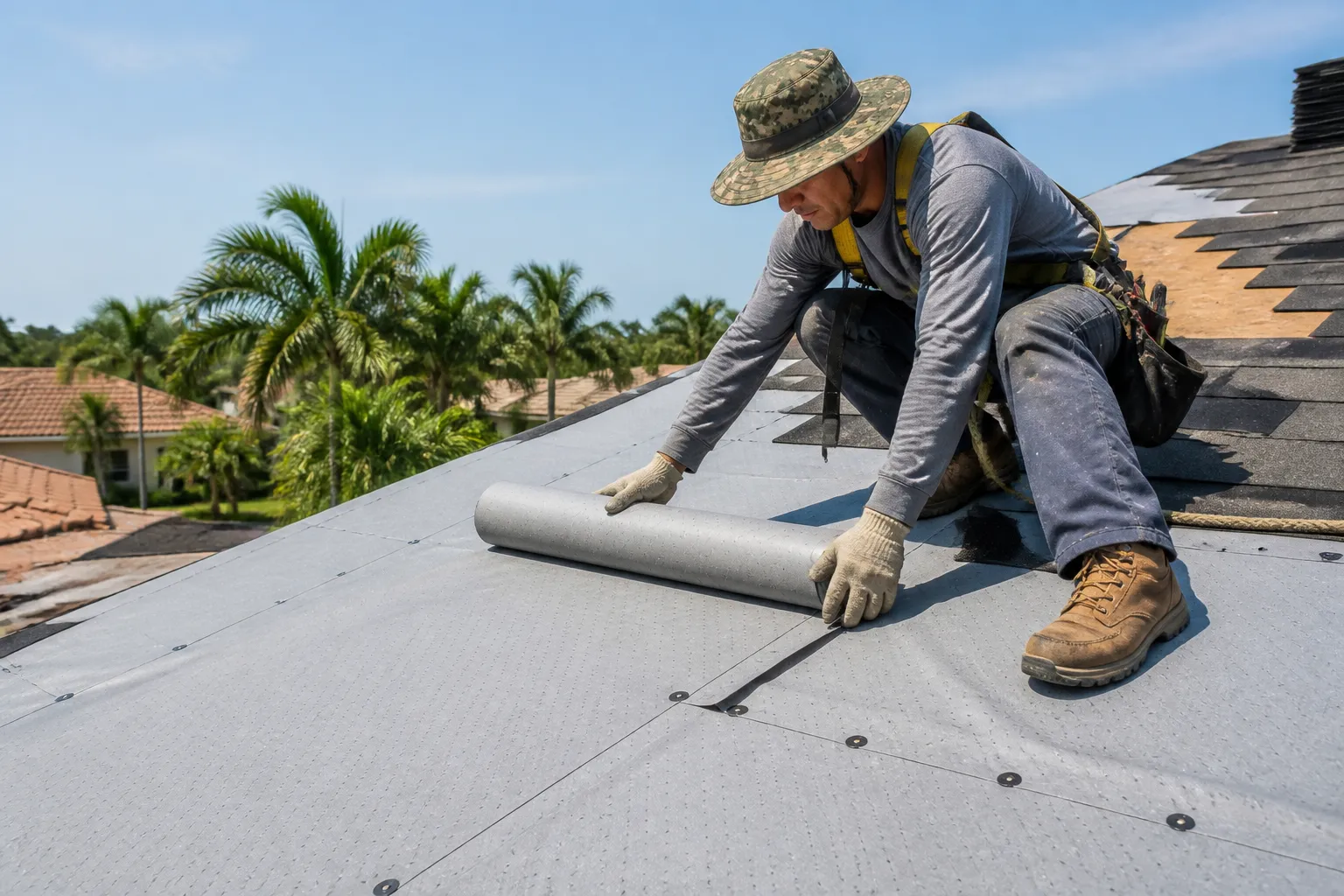
Roof underlayment is the weather-resistant layer beneath tile, shingle, or metal roofing. In Coral Springs, that hidden layer plays an important role when heavy rain and wind drive moisture beneath the outer roof covering. A roof can look acceptable from the street while aging underlayment is creating a path to the deck below.
Coral Springs Elite Roofing evaluates underlayment as part of the complete roof system. We look at roof material, valleys, flashing, penetrations, drainage, and accessible signs of moisture so the recommendation addresses the source of the concern.
Underlayment sits directly over the roof deck and beneath the visible material. It provides a secondary water-shedding layer and helps protect the deck during installation and severe weather. The proper material and installation method must fit the roof type, slope, and surrounding details.
On tile roofs, underlayment is especially significant because the tile is a durable outer covering rather than a sealed membrane. Water can move between tiles in normal conditions, so the layers below must be correctly installed and maintained.
Roof replacement gives the clearest access to the deck and underlayment. It is the right time to evaluate concealed damage, integrate flashing, and rebuild the roof in the correct sequence.
A leak does not automatically mean all underlayment has failed. We trace the water pattern and inspect nearby materials before identifying whether a focused repair or broader work is sensible.
Valleys, roof edges, skylights, pipe boots, walls, and chimneys require careful overlaps. These details often deserve attention when water appears indoors.
We discuss the timing of leaks, prior repairs, and visible changes.
We examine accessible covering, transitions, drainage paths, and signs of moisture.
We distinguish a local repair from conditions that suggest a larger project.
When work is performed, damaged materials and related details are addressed before the new layer goes in.
Underlayment, flashing, and the visible covering are integrated to direct water off the roof.
Underlayment is not a standalone fix. The deck must be sound, and the roof surface, flashing, drip edge, and drainage must work together. Covering a deteriorated area without correcting the water path can allow the same issue to return.
Homeowners can help by keeping tree limbs off the roof, observing the roof from the ground after storms, and addressing new stains promptly. Avoid walking on tile or shingles because foot traffic can create new damage.
It is a protective layer below the outer roof covering that helps manage moisture and protect the deck. It provides an added water-shedding layer when rain reaches beneath the visible roofing material.
Yes, it is a key water-shedding layer beneath the tile. Because water can move between tiles, the underlayment and flashing details play an important role in protecting the roof deck.
That depends on the tile condition, access, and roof design. The surrounding materials must be removed and reinstalled carefully enough to restore the complete roof assembly.
Yes, particularly when rain reaches beneath the outer roofing material. The nearby flashing, roof covering, and drainage path should also be reviewed to identify where the water is entering.
Accessible decking is evaluated when determining the project scope. If water has been entering for some time, checking the deck helps identify any related deterioration before new layers are installed.
Contact Coral Springs Elite Roofing to arrange a practical roof evaluation. Sharing the timing and location of leaks or stains can help guide the initial inspection.

Next Step
If you are seeing a leak, storm damage, aging materials, or simply want a professional opinion before planning work, request a free roofing estimate. We will help you understand the condition of your roof and the next practical step.