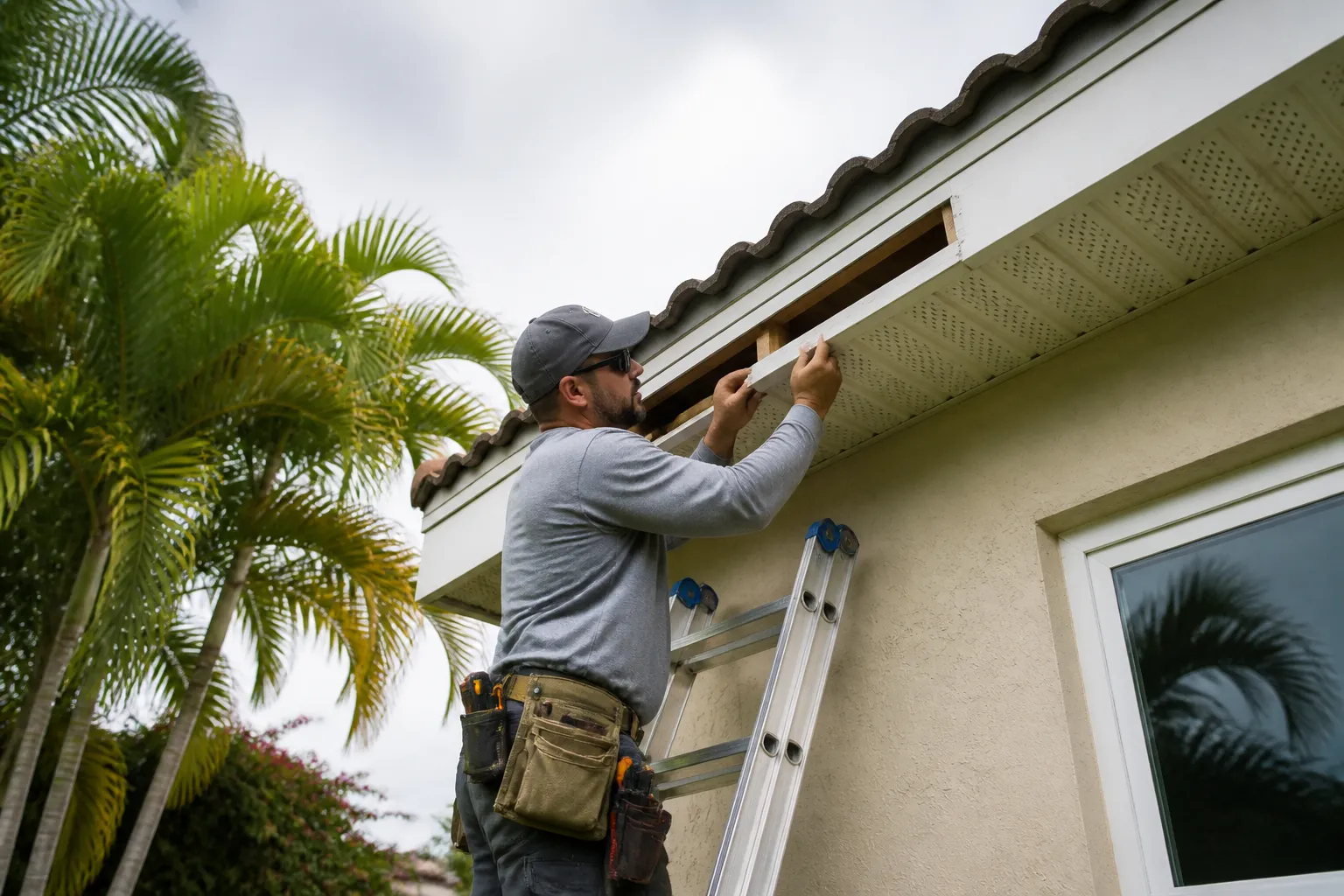
Soffit and fascia help finish and protect the edge of your roof. Fascia is the board or trim along the roofline, while soffit covers the underside of the eave. Together, they support a neat roof edge, protect exposed framing, provide locations for ventilation, and often connect with the gutter system. When they are damaged, moisture and pests can gain access to places that should stay protected.
Coral Springs Elite Roofing evaluates soffit and fascia concerns in the context of the roof above them. Peeling paint, soft wood, sagging trim, water marks, or a loose gutter may be a symptom of a roof-edge or drainage issue. The useful repair is one that addresses both the damaged component and the source of the problem.
Fascia creates a finished edge at the ends of roof rafters and is commonly used as a gutter attachment point. Soffit encloses the underside of the overhang, helping protect the eave area from weather and offering ventilation where the roof design calls for it. They should be secure, properly aligned, and compatible with the roof, drip edge, and gutter details.
South Florida humidity, intense sun, wind-driven rain, and clogged gutters can all take a toll on these areas. Because they are close to the roof edge, deterioration should not be dismissed as just a cosmetic concern.
When gutters clog or water misses the gutter, repeated wetting can deteriorate fascia and soffit materials. The repair should include a review of drainage so the replacement material is not exposed to the same condition.
Water that gets beneath the roof edge can reach the wood behind fascia. Worn roof covering, compromised underlayment, or poorly integrated edge metal may need attention at the same time.
Strong weather can loosen panels, gutters, trim, and roof-edge components. Even if the damage appears limited, open gaps should be inspected.
We look at the visible damage, nearby roof edge, gutter condition, and signs of water movement.
We evaluate whether roof covering, flashing, drip edge, or accessible framing may be contributing.
Compromised sections are addressed so concealed damage is not simply covered over.
Replacement material and trim are installed to create a secure, finished edge.
We explain any gutter or roof-edge items that should be considered to protect the repaired area.
Ventilated soffit can be part of an attic ventilation strategy, but the amount and placement depend on the home and roof system. Blocking vents with paint, insulation, or inappropriate repairs can reduce airflow. Conversely, a gap is not automatically an intended vent. Repairs should preserve deliberate ventilation while closing unintended openings.
The roof edge also relies on properly integrated drip edge and underlayment. These elements guide water away from the fascia. If water is repeatedly running behind the gutter or trim, the issue may be above the visible damage.
Periodically look along the roofline from the ground, especially after heavy rain or wind. Clean gutters safely or arrange cleaning so water can move freely. Keep tree limbs from scraping the eaves. If paint repeatedly peels or a gutter begins to pull away, schedule an inspection before the condition reaches more of the roof edge or interior framing.
No. Gutters are one possible cause, but roof leaks, edge details, wind, and age can also contribute.
It can. Where soffit vents are part of the home’s ventilation plan, damage or blocked openings may affect airflow.
Localized softness often points to repeated moisture exposure near that section of the roof edge or gutter.
Sometimes. The appropriate scope depends on the condition of adjacent material and the reason it deteriorated.
Yes. Looking at the nearby roof and drainage helps identify conditions that could damage the repaired area again.
Loose panels, soft wood, visible gaps, and water staining are all good reasons to contact Coral Springs Elite Roofing.

Next Step
If you are seeing a leak, storm damage, aging materials, or simply want a professional opinion before planning work, request a free roofing estimate. We will help you understand the condition of your roof and the next practical step.