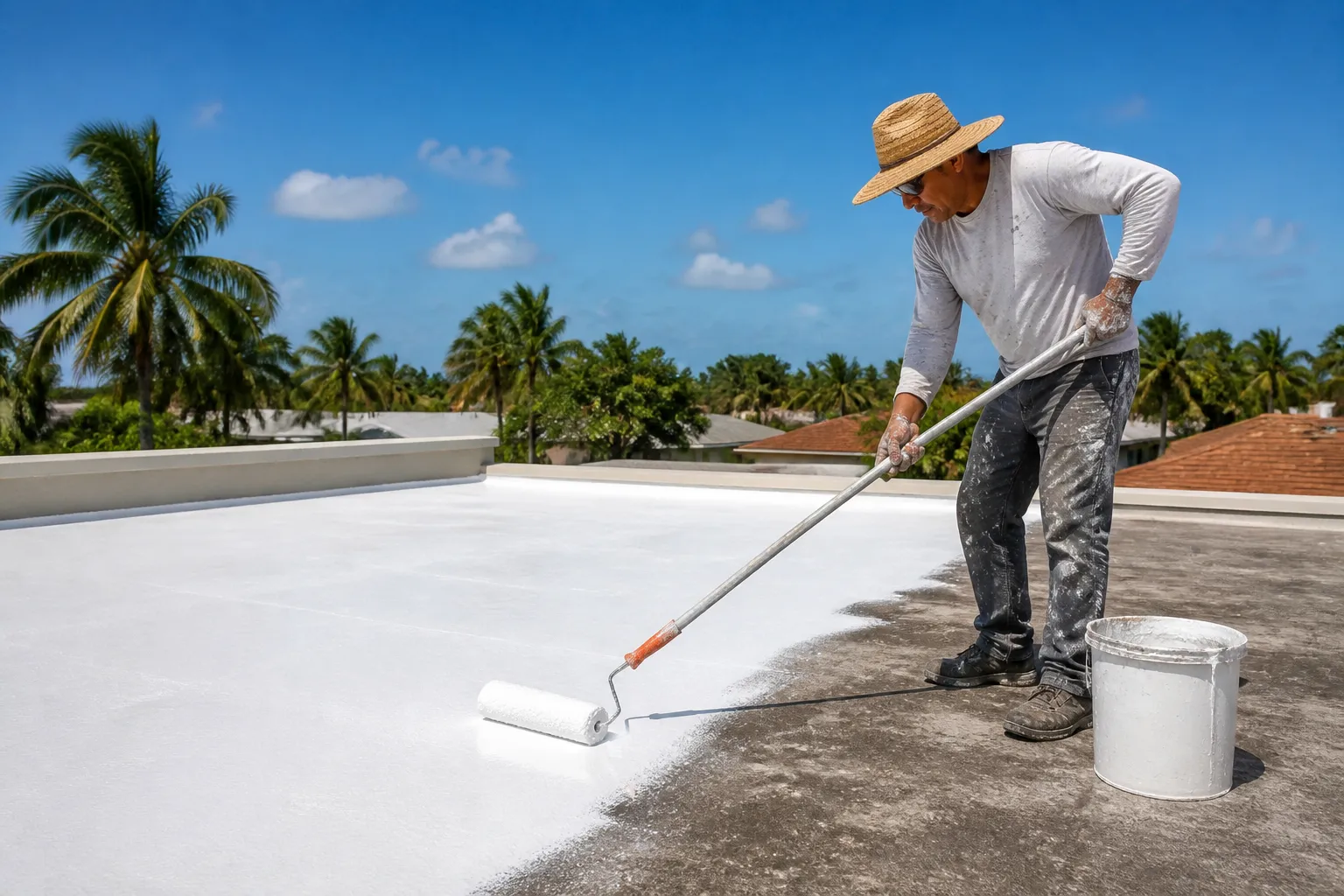
A roof coating can be a practical restoration option for an appropriate flat or low-slope roof in Coral Springs. It is not a universal solution. The existing roof surface, seams, drainage, penetrations, and underlying materials must be sound enough for a coating system to perform as intended.
Coral Springs Elite Roofing evaluates whether coating work fits the actual condition of the roof. We focus on preparation and detail work, because coating over active leaks, loose material, or trapped moisture does not correct the cause of the problem.
Compatible coatings create a continuous protective surface across a prepared roof. Reflective options can affect how the roof surface responds to sunlight. The value of a coating depends on the roof type and condition, not simply its appearance after application.
Low-slope roofs rely on carefully treated seams, edges, drains, and penetrations. A coating approach must maintain a continuous water-shedding path at each of these locations.
We review the surface, drains, seams, edges, and visible deterioration.
Open seams, damaged flashing, and other concerns are evaluated before surface treatment.
Cleaning and appropriate preparation help the coating bond to a sound surface.
Materials are installed consistently with attention to transitions and penetrations.
We explain drainage and debris conditions to monitor.
A coating needs a clean, dry, stable base. Loose debris, unstable material, and active water entry should be addressed first.
Pipes, equipment supports, roof edges, and drains are common water-management points. These details deserve close attention.
Water should move toward intended drains or scuppers. Persistent ponding may indicate a condition that needs correction beyond the coating itself.
When the roof is extensively deteriorated, has widespread wet materials, or needs deck work, a replacement may be more appropriate. An inspection helps compare the choices without treating a coating as an automatic answer.
Keep drains and roof surfaces free of debris where it is safe to do so, and have visible changes evaluated before water reaches interior areas.
No, the roof type and its current condition must be compatible with the selected coating system. A sound, properly prepared surface is needed so the coating can perform as intended.
Yes, active leak sources and failed roof details should be addressed before coating. Applying a coating over unresolved water entry can hide the problem without correcting it.
No, roof coating is not a structural repair for deteriorated decking or other underlying materials. Those concerns need to be evaluated and corrected before a coating is considered.
It is water that remains on a low-slope roof longer than expected after rain. Persistent ponding may indicate a drainage or surface condition that needs attention beyond the coating itself.
Some compatible coating systems use reflective materials that affect how the roof surface responds to sunlight. The right option depends on the roof material, preparation needs, and overall condition.
A professional evaluation of the roof surface, seams, penetrations, and drainage provides the clearest answer. That review can determine whether coating, repair, restoration, or replacement is the more practical approach.
Next Step
If you are seeing a leak, storm damage, aging materials, or simply want a professional opinion before planning work, request a free roofing estimate. We will help you understand the condition of your roof and the next practical step.